Edited by: Larissa Hotra
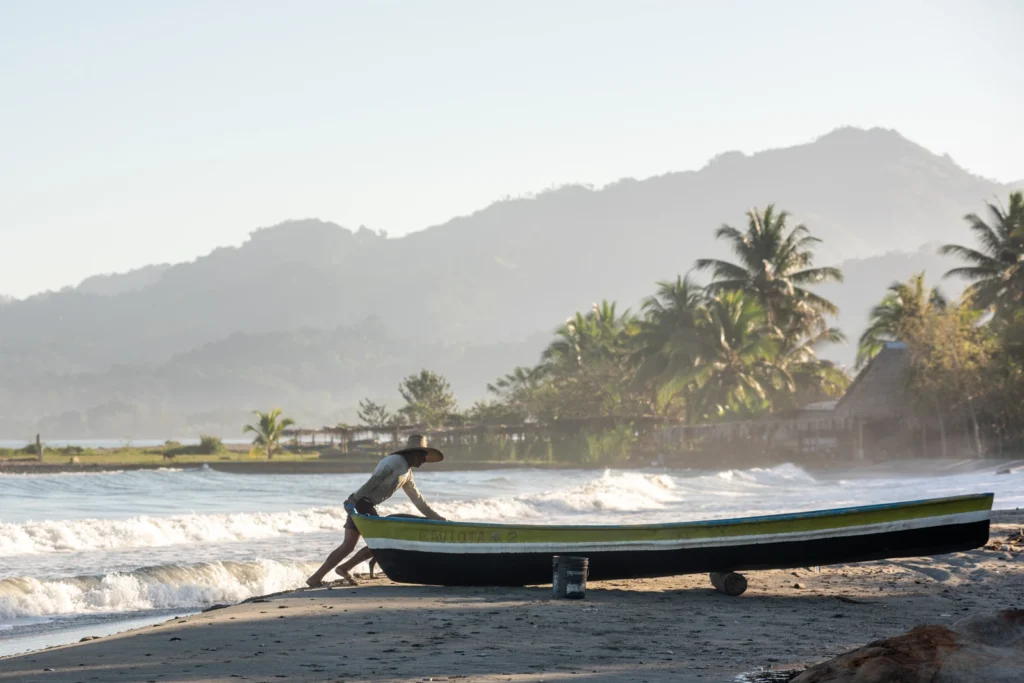
At dawn in Honduras, the tide creeps toward the fields. Eduardo Rosales, a local fisher in the El Porvenir community, tends to a small grove of African palm rows as seabirds circle above. It’s a reminder that on the coast, land and sea form a single living system. When storms strike or rivers run brown with sediment, fishers and farmers feel it first.
Across Honduras’s Caribbean coast, households often depend on both fishing and farming for survival. But poor agricultural practices, from clearing mangroves to overusing fertilizers, send sediment and agrochemicals downstream into coastal ecosystems, smothering coral reefs and threatening the very fish that sustain coastal families. As climate change intensifies storms and droughts, these intertwined pressures make it harder for people and nature to thrive.
That’s why Rare is expanding our regenerative agriculture work from Colombia to Honduras, linking sustainable fishing with climate-smart farming in two municipalities of the department of Colón: its capital, Trujillo, and Sante Fe. The work, which builds on Rare’s strong partnerships with coastal community members and a proven community-led solution, will strengthen livelihoods while restoring the ecosystems that support them.
“By linking regenerative agriculture with sustainable fisheries in Honduras, Rare unites proven approaches to support the interconnectivity of the challenges and solutions,” says Monica Varela, Vice President of Rare’s sustainable farming work. “In communities like Trujillo and Santa Fe, we are working with farmers and fishers to build stronger livelihoods and more resilient communities and ecosystems.”
An integrated approach to fishing and farming
Honduras’ Caribbean coast is home to rich coral reefs, diverse biodiversity, and sprawling mangrove forests. In Colón, households engage in both fishing and farming activities, producing African palm, yuca, and bananas while fishing for snappers and mackerels. This pairing reinforces the importance of small-scale food production for coastal communities.
“By caring for both the land and the sea — and giving people the financial support they need — we help coastal communities build more secure lives,” says Diana Vasquez, Vice President of Rare’s sustainable fisheries work in Central America.
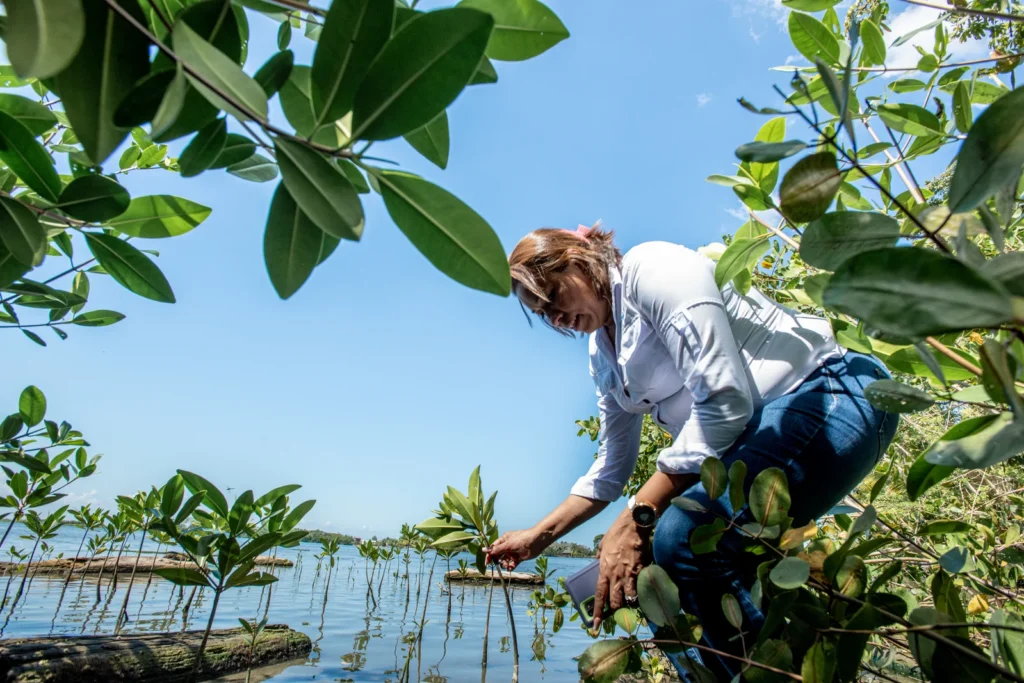
Rare’s integrated approach in Honduras will empower farmers to transition to regenerative practices that heal the land — planting trees along rivers, improving soil health, and reducing fertilizer runoff — while supporting small-scale fishers to protect mangroves, coral reefs, and marine biodiversity. Through savings clubs and financial services, Rare also strengthens households’ ability to weather climate-driven financial shocks. Together, these efforts can strengthen food security, stabilize local economies, and nurture a shared sense of stewardship for the natural resources on which Honduran fisher-farmers depend.
A 2030 vision for Honduras and beyond
As part of Rare’s 2030 Strategy, we are centering conservation on community-led, place-based food systems where fishing and farming thrive together in balance with nature. Across the Global South, we’ll focus on critical regions where small-scale fisheries, smallholder farming, and vital ecosystems meet — the areas with the greatest potential for community-led conservation.
By uniting fishers, farmers, and local leaders under shared governance, we can increase communities’ capacity for collective action. Our vision is simple: thriving communities sustained by food security, strengthened by resilience, and guided by environmental stewardship.
Subscribe to our newsletter to stay up-to-date on Rare’s work.