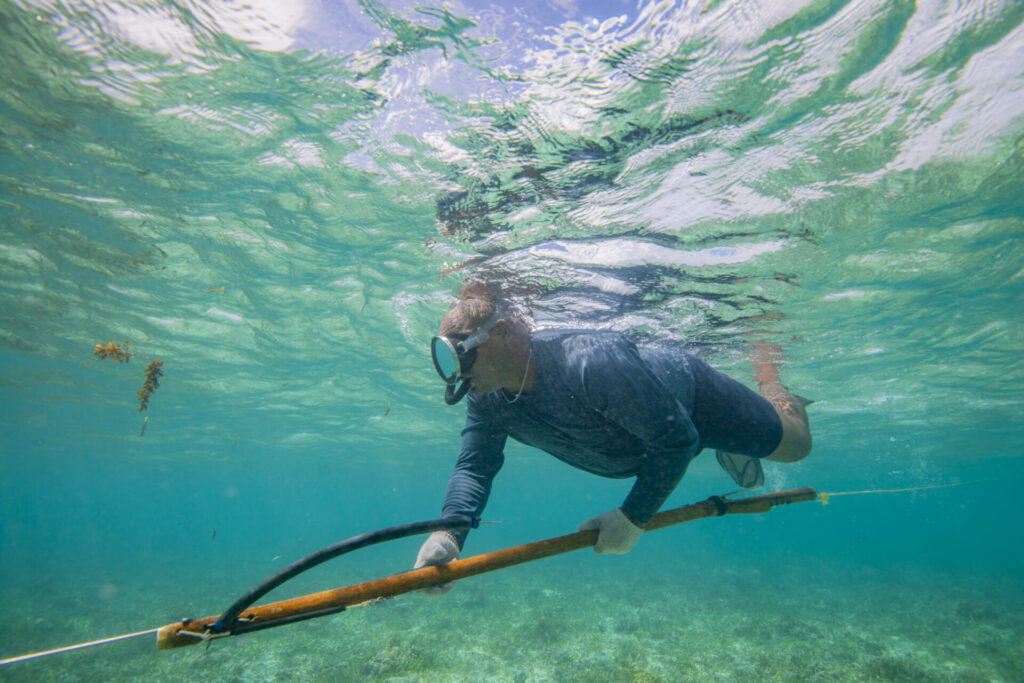
Omar Faustino’s connection with the giant clam — with its iridescent blue-green mantle, body of calcified armor, and a thousand gleaming eyes — traces back to his childhood by the sea.
“My father was a pioneer in Palau’s aquaculture scene, right here in Melekeok,” he said. “He worked with all kinds of marine organisms: corals, fish, and other living species that our waters have long nurtured. I grew up watching that work, not realizing at the time how deeply it would shape me.”
Omar is a founding member of the Giant Clam Farm Project, an innovative aquaculture initiative led by the Ngaramercherocher men’s group to restore giant clams to Melekeok’s community. Melekeok, located on the east coast of Palau’s Babeldaob Island, is home to 300+ residents who rely on coastal fisheries for their livelihoods.
“I’ve always loved fishing, something that connects nearly every family here,” added Omar. “And that passion led me to mangrove crabs and sandfish, and later to giant clams.”
But in recent decades, overharvesting and habitat degradation, combined with the growing impacts of climate change, have placed immense pressure on the species’ survival. For Omar and the men’s group, this loss signaled a need for action.
“That’s when it really clicked for me,” he explained. “This isn’t just about aquaculture.”
A symbol of Palauan culture and livelihood
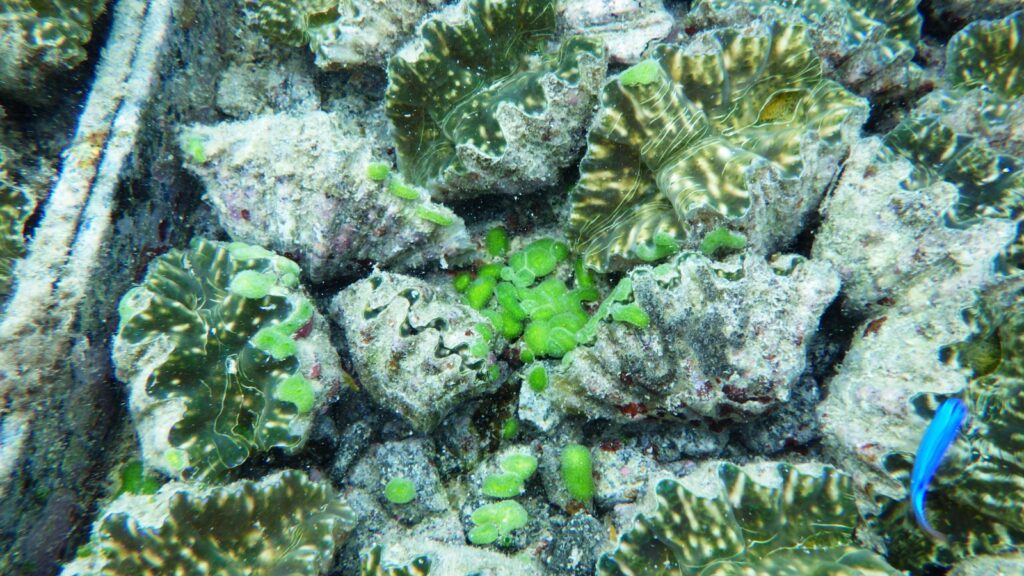
For centuries, the giant mollusk has anchored Palauan culture and livelihood. According to traditional Palauan mythology, it was the giant clam Latmikaik that birthed all life on earth, including the human giant whose body formed the Palauan islands. Historically abundant across the islands, the giant clam has long been a primary food source for coastal communities and a symbol of family tradition, with fishers passing down harvesting techniques to their children.
As a keystone species, it plays a vital role in maintaining the health of marine ecosystems by filtering nutrients and housing zooxanthellae, the tiny algae that capture and convert sunlight into essential nutrients for coral reefs.
Omar assumed clam farming would be less maintenance than fishing, but the work quickly proved far more challenging. Over the years, he learned the science and traditions behind Palau’s aquaculture and met others who shared the same passion for restoring Melekeok’s marine resources.
Revitalizing giant clams in Melekeok’s coastal waters
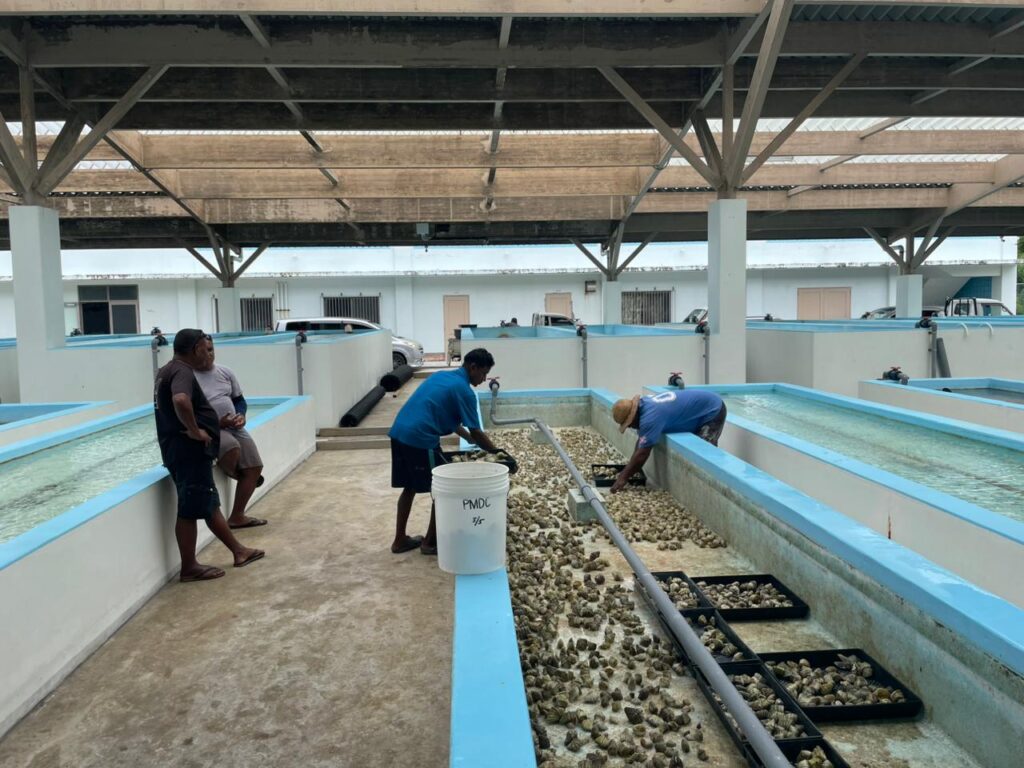
With mapping and data support from Rare, the Giant Clam Farming Project secured a grant from the Australian Direct Aid Program to restore clams to the coastal waters adjacent to Melekeok’s newly established Ngeschsiau managed access area and Ngermedellim marine sanctuary. In April, members planted nearly 5,000 adult cultured clams as part of a reseeding initiative across damaged coral reefs. In December, the team will continue restoration efforts by planting an additional 13,000 clams.
“Ngeschsiau has been overexploited,” said Omar. “We are highly motivated to restore the degraded area and impose policies to ensure it preserves wild [clam] stocks for future use. Clam farming contributes to the health and welfare of Melekeok citizens, [and] it improves and restores degraded reefs that provide alternate food sources and opportunities for other sources of income through tourism.”
As Palau adopts a blue economy approach to addressing the dual climate and biodiversity crisis, initiatives like the Giant Clam Farming Project show how aquaculture can be an effective pathway for strengthening resilient communities and ecosystems.
When asked what he hopes the project will look like in a year, Omar answered with a simple goal: “More farmers and community engagement to protect our natural resources.” In 2026, Omar and the team will onboard interested fishers and farmers from local women’s groups to help scale the initiative.
“This work is about our community, our reefs, and keeping the connection between people and the sea alive,” said Omar. “Since [I realized that connection], I haven’t given up.”
By Kaila Ferrari
Edited by Larissa Hotra