
From shore, they look like simple buoys bobbing in the water. In Mogincual District in northern Mozambique, they mark something more consequential: the boundaries of fishing areas that communities have agreed to manage and protect.
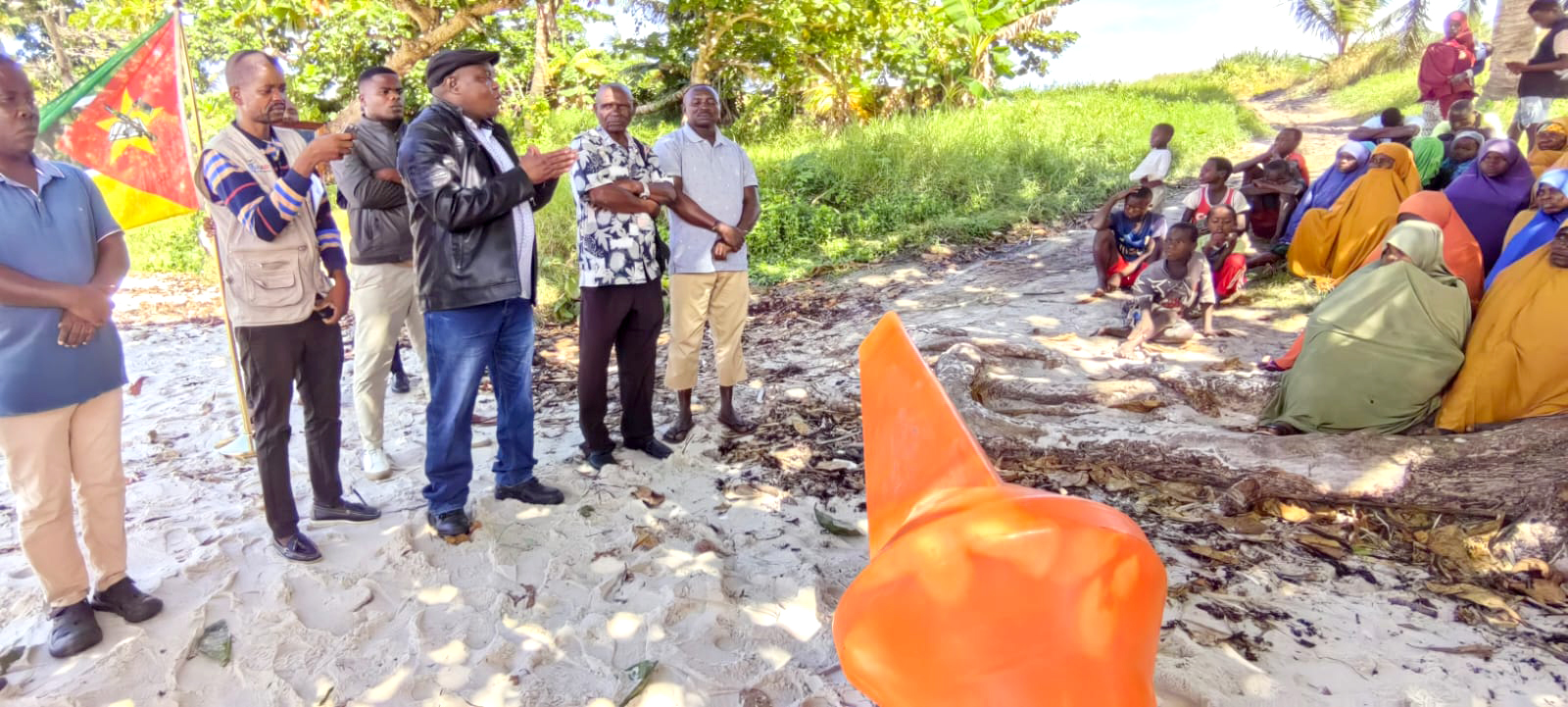
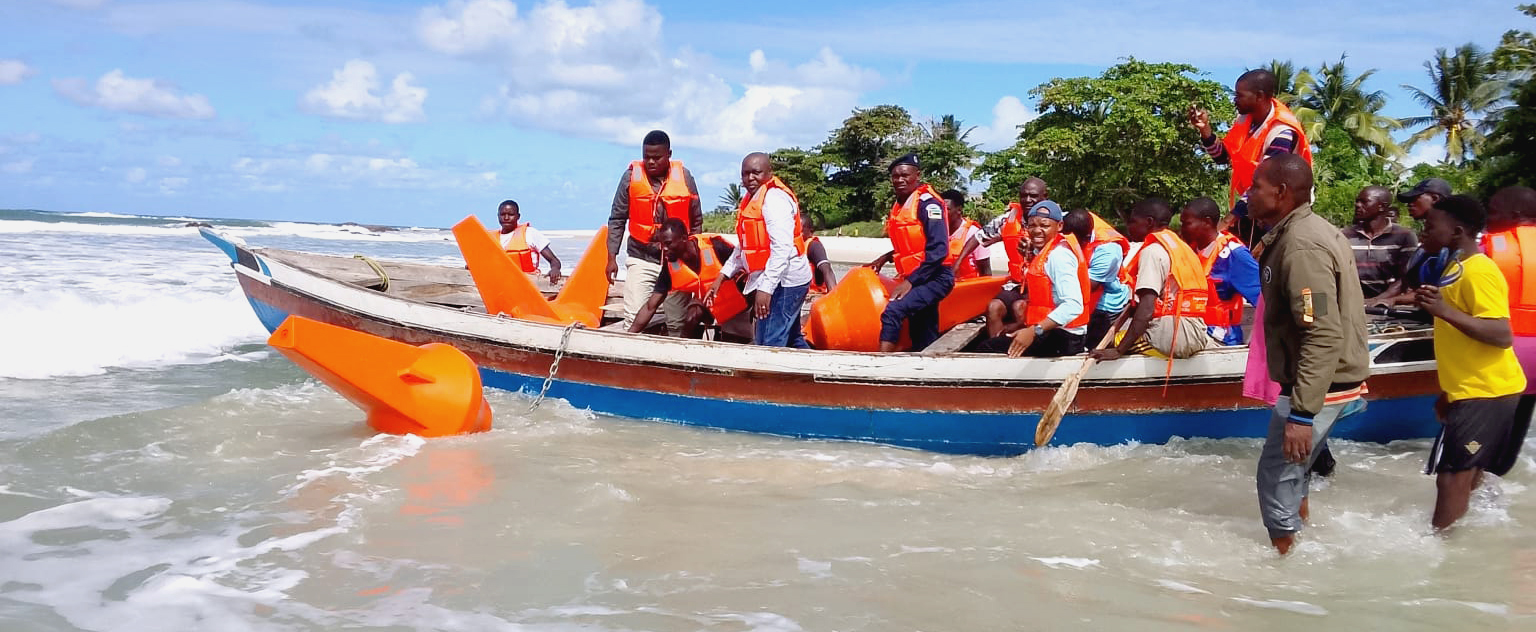
In July, community members, local leaders, and District Administrator João Bento Zampula came together to install buoys marking their community-managed fishing areas. The buoys give fishers, officials, and visitors a shared reference point for protecting the fisheries local families depend on.
From agreements to markers in the water
For years, Rare has worked alongside communities in Mozambique to strengthen local fisheries management through Community Fisheries Councils (CCPs), building trust, supporting local decision-making, and helping fishers manage their coastal resources. The buoy installation is a tangible expression of that work. Until now, the boundaries of these fishing areas were known primarily through meetings and maps. The new buoys give those community agreements a physical presence in the water.
“A buoy is much more than a marker in the water,” says Alice Costa, Rare Mozambique Program Director. “It’s a visible investment that tells communities, ‘We believe in you, and we believe this work matters.’”
Behavioral science shows that people are more likely to follow shared rules when they encounter clear reminders of them. For fishers, the buoys provide a practical cue: this area is governed by agreements the community has made together.
“That recognition builds pride and ownership,” Alice adds. “It strengthens social norms and motivates communities to protect and maintain the resources they depend on.”
Putting national policy into practice
The installation also shows what it takes to turn national policy into local practice. Mozambique’s fisheries regulations provide a legal pathway for community-managed fishing areas, while district leaders help communities exercise those rights. By joining the installation, João signaled that the new boundaries—and the communities responsible for managing them—have the support of local government.
“One of my responsibilities as District Administrator is to support our communities so that they can succeed and improve their livelihoods,” shares João Bento Zampula, District Administrator of Mogincual. “These buoys represent hope, partnership, and trust in the communities that depend on fisheries resources for their livelihoods.”
These buoys represent hope, partnership, and trust in the communities that depend on fisheries resources for their livelihoods.”
Appointed District Administrator of Mogincual in 2025, João has prioritized participatory governance. He has revitalized district community consultative councils and strengthened community-driven decision-making. As a Coastal 500 member, he exchanges lessons with local leaders from other coastal communities and led World Oceans Day activities across the district, mobilizing community cleanups and promoting responsible fishing practices. And at the 2026 Our Ocean Conference in Mombasa, he joined leaders calling for greater support for community-led ocean action.
“I am proud to stand alongside our communities, together with our partners, supporting them to take an active role in protecting and sustainably managing the resources that sustain their lives and the future of generations to come.”
Lasting markers of community leadership
Made to withstand the demanding conditions of the Indian Ocean, the buoys are designed to support community fisheries management for years to come. Their durability signals that the agreements they mark — and the communities responsible for carrying them out — are expected to last. Their installation also shows what becomes possible when local governments recognize community decisions and help put them into practice: clearer boundaries, stronger local authority, and greater support for protecting and sustaining the fisheries that families depend on.