
The news cycle doesn’t always make it easy to feel hopeful. But it rarely tells the whole story.
In reality, people are often more aligned, more supportive, and more ready to act than the public conversation suggests. These ten wins show what’s possible when people are part of protecting nature.
1. The ocean crossed a historic threshold
For the first time in history, more than 10% of the global ocean is now officially under protection. Long considered a benchmark for meaningful marine conservation, it marks real progress in the global effort to protect biodiversity and sustain the fishing communities that depend on healthy seas.
2. The high seas finally have a guardian
In January, the UN’s landmark High Seas Treaty officially entered into force. The agreement covers the roughly two-thirds of the ocean that lies beyond any nation’s borders, comprised of waters that had long operated in a legal gray zone. It sets new standards for environmental review and conservation measures in international waters, closing a gap that illegal fishing and destructive practices had exploited for decades.
3. Ghana made history with its first marine protected area
Ghana became the first country in its sub-region to establish a national marine protected area, a milestone for West African ocean conservation. The move signals growing political will across the Global South to protect coastal ecosystems and the communities whose livelihoods depend on them.

4. 500+ coastal leaders are driving a global movement for thriving seas
The Coastal 500 network has surpassed its goal, uniting more than 500 local government leaders across eight countries committed to protecting coastal ecosystems and strengthening the communities that depend on them. Together, they represent over 2,000 communities stewarding nearly 100,000 square kilometers of coastline. It’s a powerful signal that locally-led conservation is scaling worldwide.
5. Coho salmon returned to California after 30 years
Coho salmon swam back into California’s Russian River for the first time in three decades, with record returns also recorded in Mendocino coastal tributaries. It shows that years of habitat restoration, water management, and community-driven conservation are working, and that rivers, given the chance, can recover.
6. Amazon communities are protecting 60 million acres
A major initiative called ARPA Comunidades is securing 60 million acres of Amazon floodplain forest by empowering Indigenous Peoples and local communities to manage and patrol it. Research shows that for every acre of lake directly patrolled, some 86 surrounding acres are protected — making community stewardship one of the most cost-effective conservation strategies.
7. Costa Rica’s forests are coming back
A February 2026 study found former cattle pastures in Costa Rica — restored through the country’s long-running payment for ecosystem services program — are recovering rapidly, with regrowing forests reaching 75% similarity to old-growth forests. It’s one of the clearest examples of regenerative land use and nature-based solutions to biodiversity loss.
8. Wildlife — on land and at sea — is rebounding
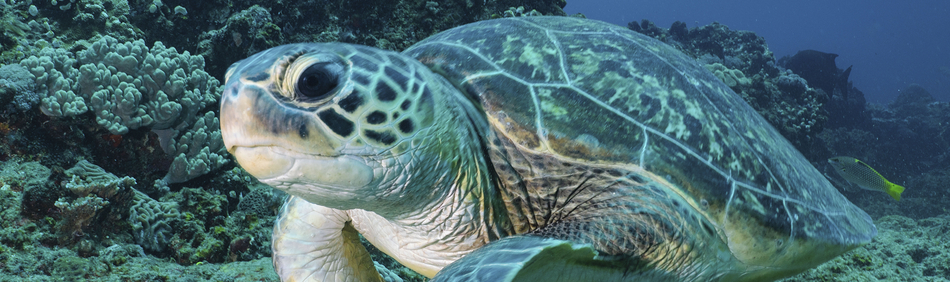
From green sea turtles, whose populations have risen by roughly 28% since the 1970s, to rhinos recovering in Kenya, conservation efforts are helping iconic species come back from the brink. In the ocean, nearly all global tuna stocks are now at healthy levels and not experiencing overfishing — showing that strong management can restore entire fisheries.
9. 99% of new U.S. energy capacity will be renewable in 2026
According to the U.S. Energy Information Administration, solar, wind, and battery storage are expected to account for 93% of the 86 gigawatts of new electric generating capacity planned for the U.S. grid in 2026. It’s a clear sign that the shift to renewable energy is accelerating now.
10. The world’s largest environmental fund just got a major infusion
Donor countries pledged an initial $3.9 billion to the Global Environment Facility for its ninth replenishment cycle, covering 2026 to 2030. These years are widely seen as decisive for meeting global biodiversity and climate targets. The GEF has provided more than $27 billion in grants over three decades and mobilized a further $155 billion in co-financing for nature-positive development worldwide.
At Rare, we believe community-led conservation can build resilience for people and nature. From fishing and farming communities in Honduras and the Philippines to a global network of local government leaders around the world, we support local leaders and their communities and ecosystems thrive together.
Subscribe to learn more about our work
Header Photo Credit: Luca Crudeli, Marine Market Systems.