
As the sun rises in Botswana, agro-pastoral communities in the Okavango Delta begin their daily work of tending livestock and cultivating crops. Using ecological knowledge passed down through generations, they read the land for signs of drought and environmental changes. Soil moisture, plant growth, animal behavior, and cloud formations all offer vital insights that guide their daily decision-making.
Traditional communal livestock rearing accounts for more than 70% of household income in Botswana’s rural areas, but intensifying climate change has introduced growing uncertainties and risks for people and animals. Across rangelands like the Kalahari Desert and the Okavango Delta, temperatures are rising at twice the global rate. Extended dry seasons, devastating droughts, and altered rainfall patterns are exacerbating ecosystem degradation, making it harder for communities to meet daily needs. As water sources shrink, pastoralists must travel farther, increasing the risk of conflict between people and wildlife.
The Ecosystem-Based Adaptation and Mitigation in Botswana’s Communal Rangelands project, a national Government of Botswana initiative financed by the Green Climate Fund (GCF), co-financed by the Government of Botswana and executed by Conservation International, is fostering solutions to these mounting ecological and livelihood challenges. The project uses a community-driven approach to livestock and rangeland management to restore degraded ecosystems, strengthen livelihoods, and build resilience to climate change.
A people-centered approach to climate resilience
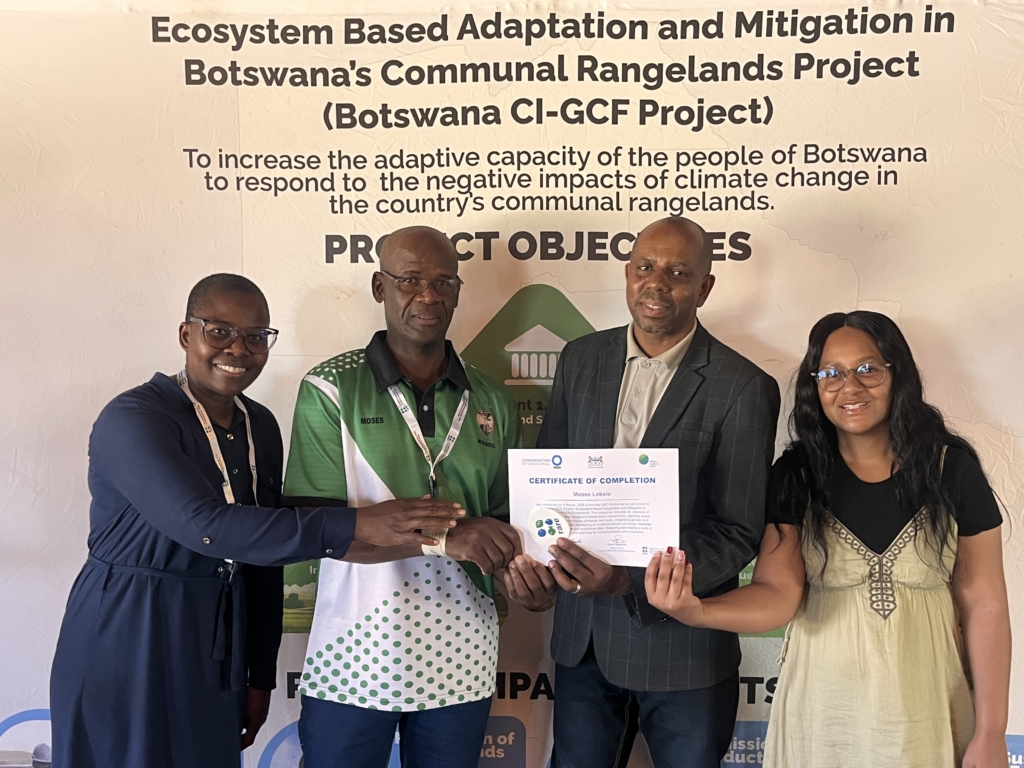
At the heart of the project is the Herding for Health approach: a model for improving livestock and rangeland management through collective action, ecological restoration, and community leadership. In Botswana, this approach is being adapted and applied to local contexts to help communities respond to a changing climate while sustaining their way of life.
Over the course of the project, efforts aim to increase the climate change resilience of 247,000 people and improve the management of 46,000 km² of communal rangelands across Ngamiland, Kgalagadi, and Bobirwa districts.
The approach follows a One Health framework, recognizing the interdependence of people, animals, and ecosystems. It integrates four key pillars: healthy rangelands, healthy animals, thriving livelihoods, and good governance.
“Through its community-led program, this project enhances climate resilience and food security by combining regenerative rangeland management with community-led behavior change, protecting livestock assets and livelihoods amid intensifying climate change,” says Conservation International’s Botswana GCF Project Communications Manager Lame Ramokate.
Conservation International works alongside the Government of Botswana, local communities, and Indigenous Peoples to implement the model across these landscapes. Together, they are co-creating Rangeland Stewardship Agreements with support from Farmer Facilitation Teams to build and enforce sustainable management of communal grazing areas.
Through these agreements, pastoralists voluntarily participate in collective grazing systems managed by locally selected EcoRangers. Drawing on Indigenous Knowledge and technical training, the EcoRangers guide practices such as rotational grazing, ecological restoration management (e.g., erosion control, bush clearing, and ponding), collective herd management, and ecological monitoring. These efforts help restore vegetation, improve soil health, and reduce pressure on fragile ecosystems.
In return, participating communities benefit from improved livestock health, access to veterinary services, and stronger connections to markets — helping to stabilize incomes while reducing climate-related risks.
“At first, we didn’t know how to graze properly. We were just moving around randomly, which damaged the land. There was no pasture and cattle were dying,” says Lesedi Mangogola, Chairperson of the Mathathane Grazing Committee in Bobirwa. “Now that we have been trained, we graze properly. The cattle are healthier and have gained weight. We can sell them to send our children to school.”
From individual choices to collective impact
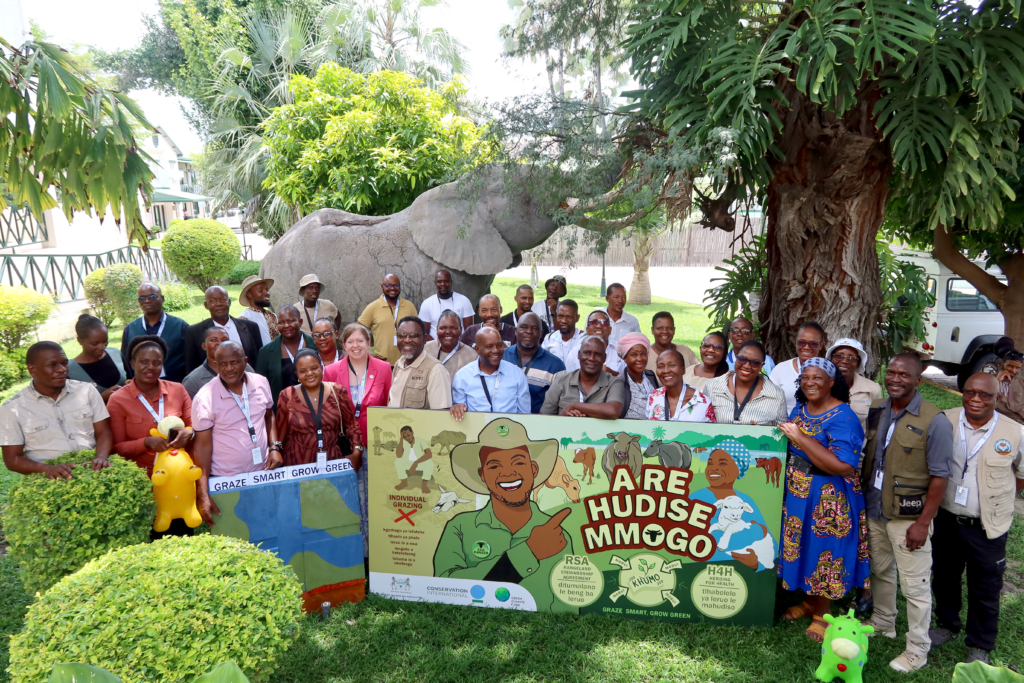
As an implementation partner, Rare brings its expertise in community leadership and behavioral science to support this work, helping translate sustainable grazing practices into lasting social norms.
“For over 50 years, Rare has supported community-led conservation around the world,” says Kate Mannle, Rare’s Senior Director of Global Solutions. “We work to scale people-centered solutions that address critical challenges like biodiversity loss and climate change. In Botswana, we’re partnering with local communities to strengthen livelihoods and build resilience to a changing climate.”
Rare’s role includes working with Farmer Facilitation Teams and Landscape Managers to facilitate peer learning and deliver training tailored to each community’s needs and cultural context. The team is also designing a public awareness campaign to build support for climate-resilient livestock production and sustainable rangeland management across Botswana’s meat value chain.
A Rare 2025 report identified “sustainable grazing” as one of the most promising solutions for improving outcomes for people and nature. This project represents an opportunity to expand that work in Africa, complementing its long-standing efforts in regenerative agriculture, sustainable fishing, and community-led conservation.
Scaling conservation for a future of resilience
Across Botswana’s communal rangelands, this work is helping to demonstrate how locally led approaches can restore ecosystems while strengthening livelihoods. By combining ecological science, Indigenous knowledge, and behavior-centered design, communities are building systems that are more resilient to climate change and better equipped to sustain both people and nature.
“Conservation ultimately comes down to people and their relationship with nature,” says Mannle. “By supporting local leadership and aligning incentives with sustainable practices, this work can deliver durable and equitable outcomes for communities, ecosystems, and future generations.”
Written by: Kaila Ferrari
Edited by: Larissa Hotra
Photos: Meg Serranilla