
Charity Casbadillo once held her three-year-old daughter above the waves of a capsizing boat, not knowing if either of them would make it to shore.
The disaster struck in 2010, during what should have been a routine twenty-minute crossing from San Pablo Island to the mainland of Hinunangan, Southern Leyte, Philippines. Charity was on her way to a women’s financial empowerment group.
The boat was overloaded and started sinking. Charity couldn’t swim. In the chaos, she handed her daughter to the boat owner and held on to the hope that they would both survive.
Thankfully, all boat passengers survived. Charity has never forgotten that frightful day. In its aftermath, her resolve to serve the community that almost lost her grew stronger.
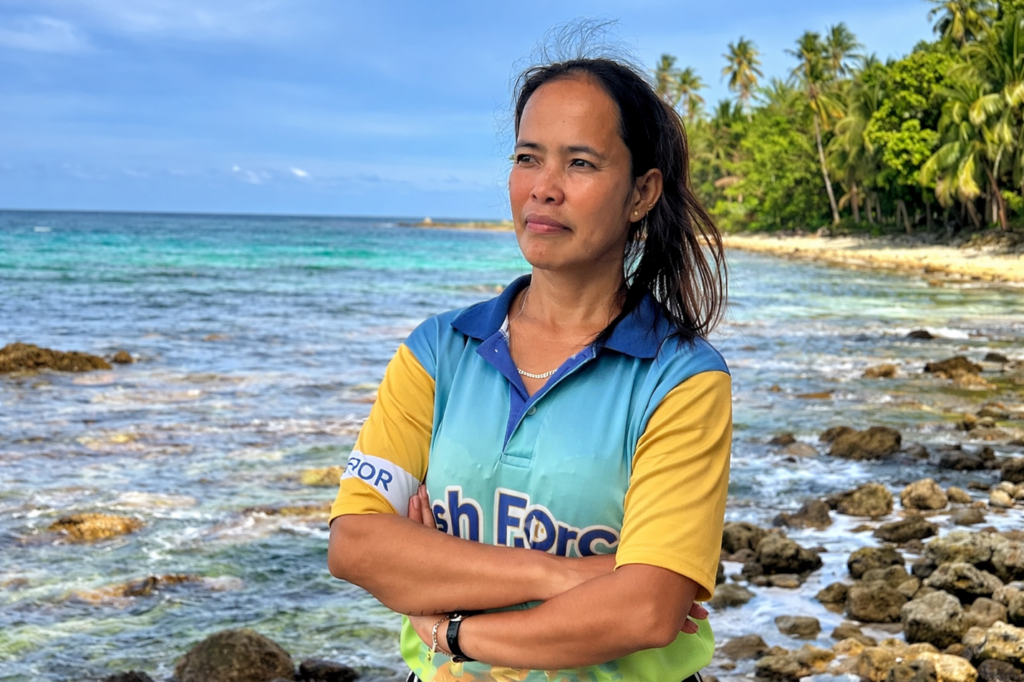
Today, Charity is the Treasurer of the Municipal Fisheries and Aquatic Resources Management Council (MFARMC). She regularly crosses the same stretch of water as ten years ago, determined to ensure her community has a voice in the management of local fisheries. Her husband still worries for her safety, but she goes anyway, rain or shine.
“I dedicate my life to serving my community, even if it’s hard and even if I have only a little in my pocket,” she says. She often pays for the boat’s fuel herself, making it possible for other women to travel to the mainland and attend trainings.
Fondly called “Tsang” (Auntie) by those who know her, Charity never finished formal schooling. Nevertheless, she has built something rarer than a diploma: a reputation for showing up, following through, and carrying others forward.
Through Rare’s training in sustainable fisheries management and financial literacy, Charity has deepened her knowledge and confidence as a leader in sustainable fisheries. She helps bring fishers, women, and local leaders together for Rare-hosted “Kapehan, Karagatan, Kaalaman” (Ocean, Coffee, Knowledge) sessions, encouraging dialogue to foster a deeper understanding of community members’ lived experiences. Through her active leadership, she has become a trusted voice in fisheries conversations long dominated by men.
In addition to her role as treasurer, Charity leads a women’s organization on San Pablo Island. There, more than 20 women produce handcrafted wooden goods for international markets, turning small opportunities into steady income and shared dignity.
“Women on the island are not mere gleaners or wives,” she says firmly. “They are part of a bigger society where they can influence decisions.”
Holding the line at sea
With leaders like Charity at the forefront, women are transforming social expectations and shaping a more equitable future for coastal guardians. In nearby communities, that same shift is reshaping enforcement and protection efforts of coastal waters.
In the neighboring province of Salcedo, Eastern Samar, dynamite fishers were shocked when they were apprehended off the coast for illegal bombing. They could barely believe that the person holding them accountable was a woman.
That woman was Shirly Ronabio, who still laughs at their disbelief.
As Business Manager of the Maliwaliw Multipurpose Association and Secretary of her municipality’s Municipal Fisheries and Aquatic Resources Management Council, Shirly has spent years enforcing coastal fishing laws in waters where illegal fishers once assumed no one was watching. The Binabasalan Marine Protected Area that she helps oversee was shortlisted for the Para El Mar award, a national recognition for outstanding marine protected area management. But for Shirly, the work goes beyond recognition. It’s about the survival of the communities and coastlines she calls home.
Through Rare’s sustainable fisheries program, Shirly has been part of a growing network of community leaders trained and supported in community-led coastal enforcement, as well as fishing rules, regulations, and practices. More than knowledge alone, the program gave her the recognition and confidence that her role in protecting these waters truly matters.
“We depend a lot on the ocean,” she says. “It’s important to protect marine resources for us, but also for the next generation.”
A growing movement for inclusive fisheries management
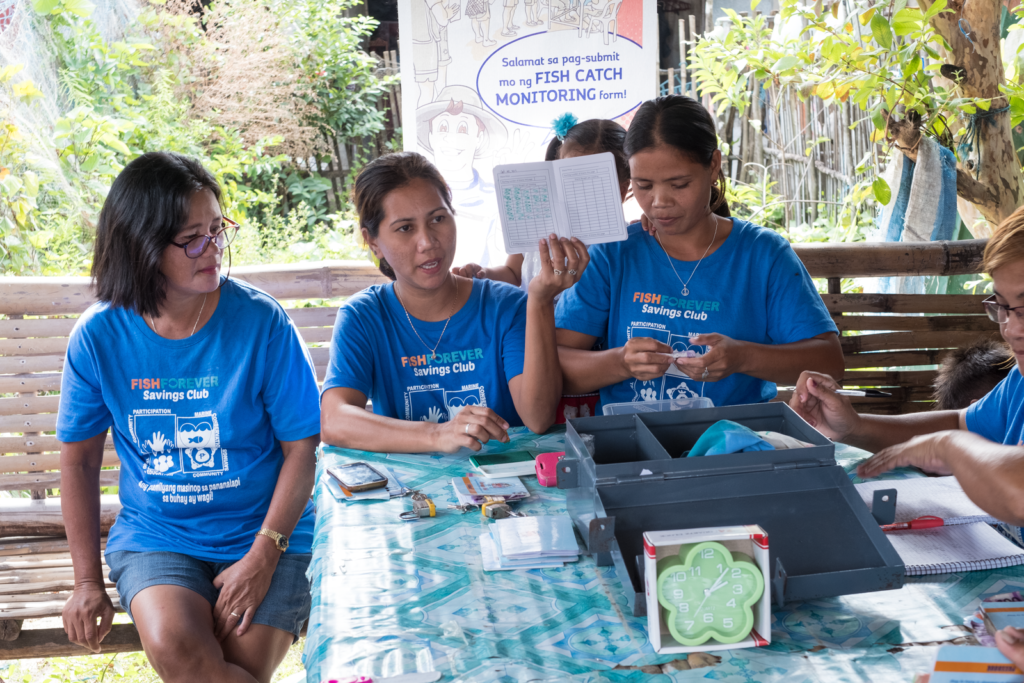
Women like Shirly and Charity are not outliers. They are the result of a deliberate and growing effort to support local leaders — placing conservation tools and financial resources in the hands of the people closest to the frontlines.
Rare works with fishing communities and local governments to strengthen coastal resource management, establish sustainably managed fisheries, and enable inclusive participation in decisions that affect both people and nature. At the heart of this work is a belief that lasting conservation requires local leadership.
In communities like Salcedo and Hinunangan, that mission means investing in the women who have always been there, doing the work quietly and without enough recognition — until now.
Charity puts it plainly: “Leadership is not a badge someone wears wherever she goes, but the courage to influence more women to travel beyond the island so we can collectively challenge the status quo.”
The ocean sustains coastal communities, providing a lifeline for food security and economic livelihood. Through the courage of women who defend it, even at great personal cost, communities are learning new ways to sustain it in return.
Written by: Kristine Balbido– Ramirez
Edited by: Kaila Ferrari and Larissa Hotra