
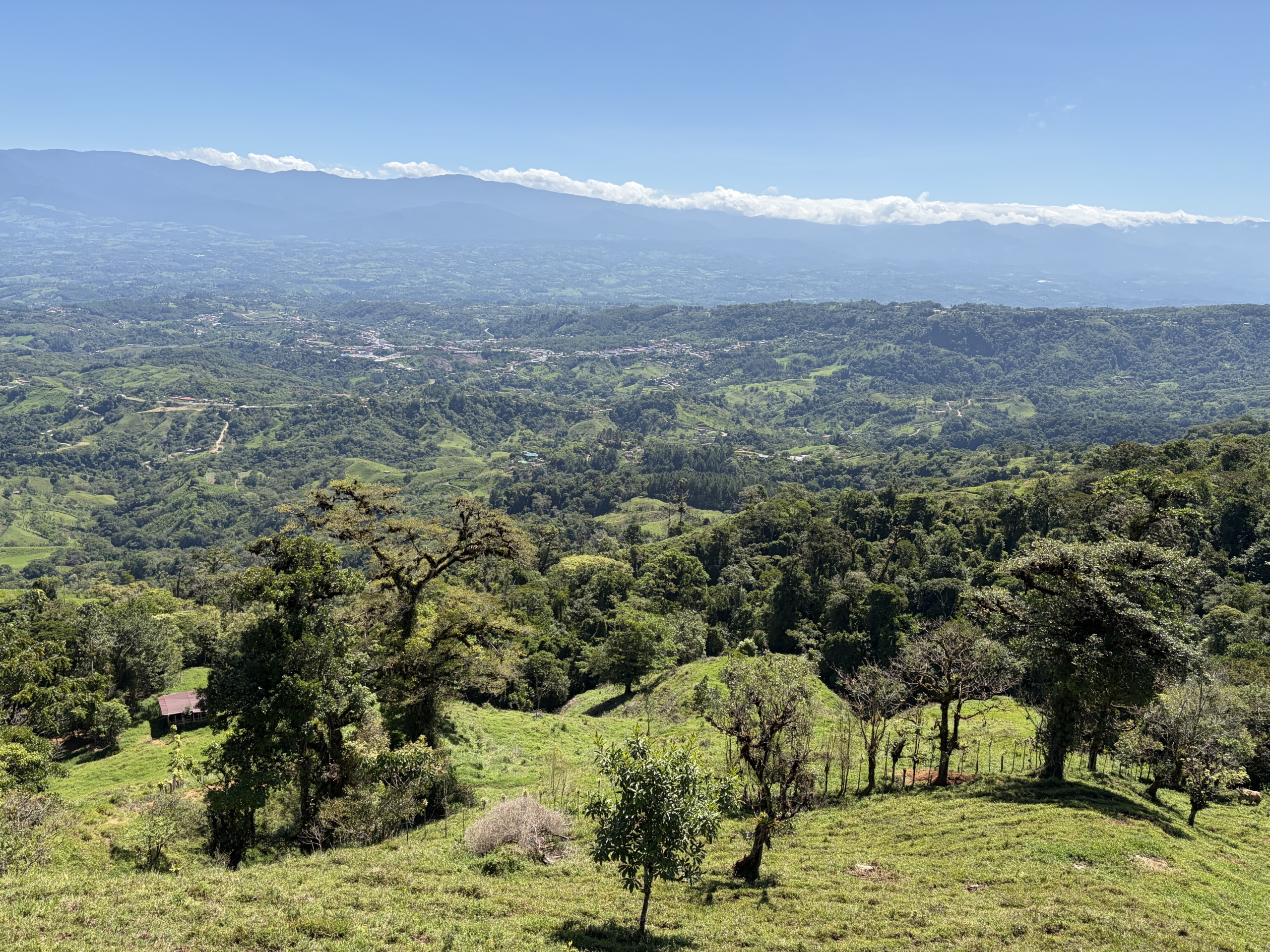
When Vivian returned to the farm she and her husband had acquired in the Hamacas community in southern Costa Rica, she expected to see the lush forest where she had played as a child. Instead, she found a cleared pasture.
The farm sits within the landscape that could reconnect two of Central America’s largest protected forests. “I immediately said to [my husband], ‘Let’s start letting the forest grow back,’” Vivian recalled.
Since then, Vivian has embarked on a mission to rewild the farm by planting native fruit trees and plants. “The monkeys, the birds, everything comes to eat here,” said Vivian. “And what that tells me is that up in the forest, they no longer have food.”
Vivian’s farm represents an unconventional but increasingly essential idea in conservation: farms don’t have to be at the edge of nature. Managed thoughtfully, they can become part of the habitat that connects them.
Farmers like Vivian are central to Osa Conservation’s mission to build a climate-adaptive mega wildlife corridor across southern Costa Rica. Through a new partnership, Rare will bring its behavioral science and community engagement expertise to the initiative, helping to ensure that the needs, motivations, and aspirations of farming communities at the heart of the landscape shape restoration efforts.
A landscape vital for biodiversity
Southern Costa Rica contains two of Central America’s most biologically important protected landscapes — Corcovado National Park and La Amistad International Park. In Corcovado, on the Osa Peninsula, tropical forests, mangrove ecosystems, and wetlands support endangered wildlife like the Baird’s tapir, white-lipped peccary, and hundreds of bird species. To the east, La Amistad, recognized as a UNESCO World Heritage Site, stretches across the Talamanca Mountain range along the Costa Rica-Panama border, encompassing diverse ecosystems of glacial lakes, cloud forests, swamps, and tropical rainforests home to 60% of Costa Rica’s species.
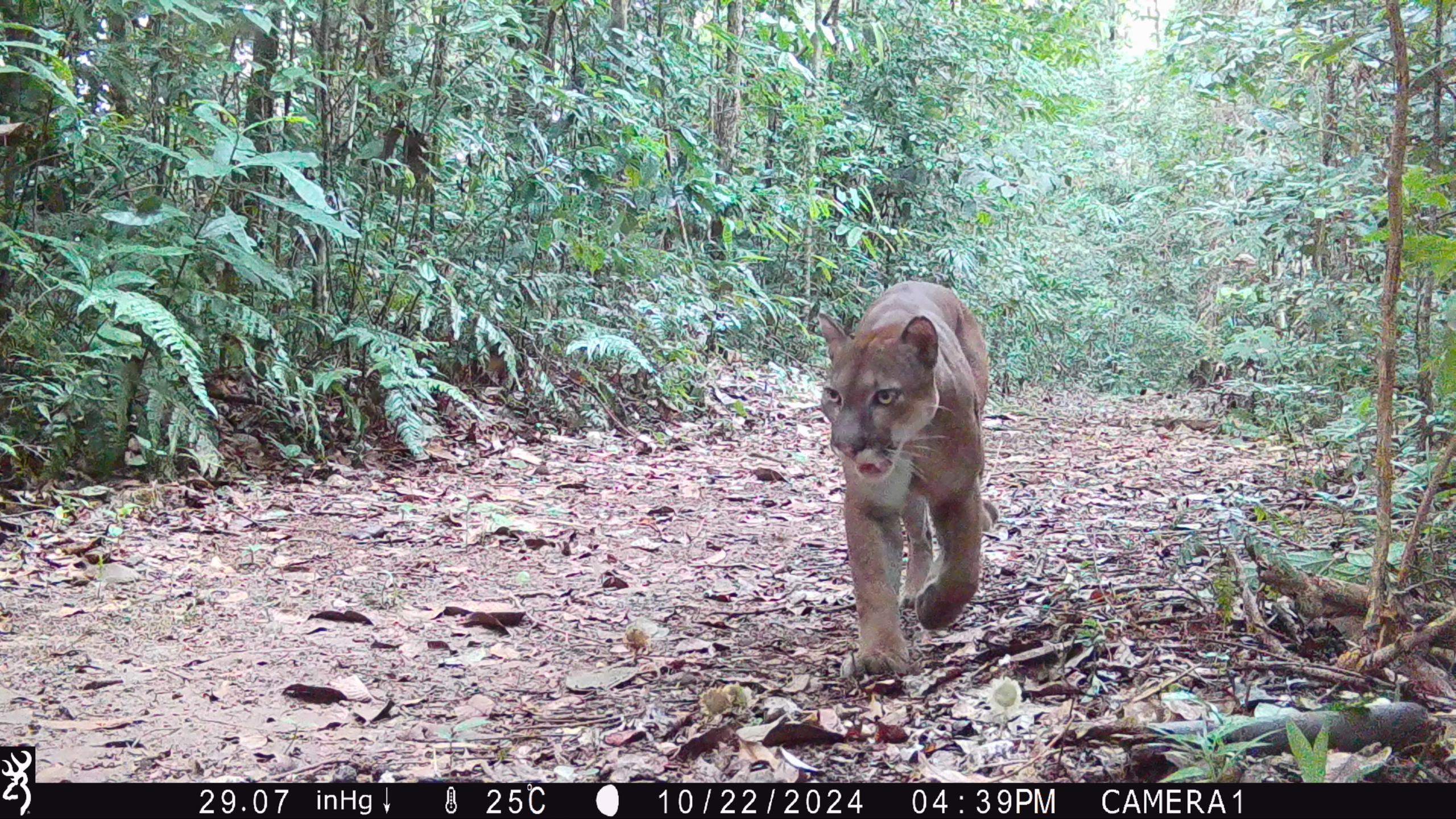
Wildlife doesn’t recognize the boundaries of national parks. Jaguars, tapirs, birds, and other species rely on connected landscapes that allow them to move freely in search of food, mates, and suitable habitat. That journey often takes them across land like Vivian’s farm.
Between Corcovado National Park and La Amistad International Park lies a patchwork of farms, ranches, Indigenous territories, and rural communities whose land-use decisions shape southern Costa Rica’s ecological systems.
Osa Conservation partners with local farmers on a voluntary basis, uniting them as a collective force to drive restoration across the landscape. “Camera traps as well as landscape mapping and exploration have helped us identify the places where reconnecting habitat will have the greatest impact,” said Osa Conservation’s Tropical Forest Program Manager, Rodrigo De Sousa. “With Rare’s partnership, we’re working alongside local communities to turn those priority areas into wildlife corridors that benefit both biodiversity and the people who live here.”
Creating a corridor strategy that supports livelihoods
Building successful wildlife corridors requires understanding both the ecological landscape and the local communities that call it home. In early 2026, Rare conducted interviews with many farmers who live within the margins of the planned wildlife corridor intended to connect Corcovado National Park on the Osa Peninsula with La Amistad International Park. These interviews revealed that farmers living just miles apart often shared similar concerns about water, soil, and their communities’ future, even though their reasons for participating in conservation varied.
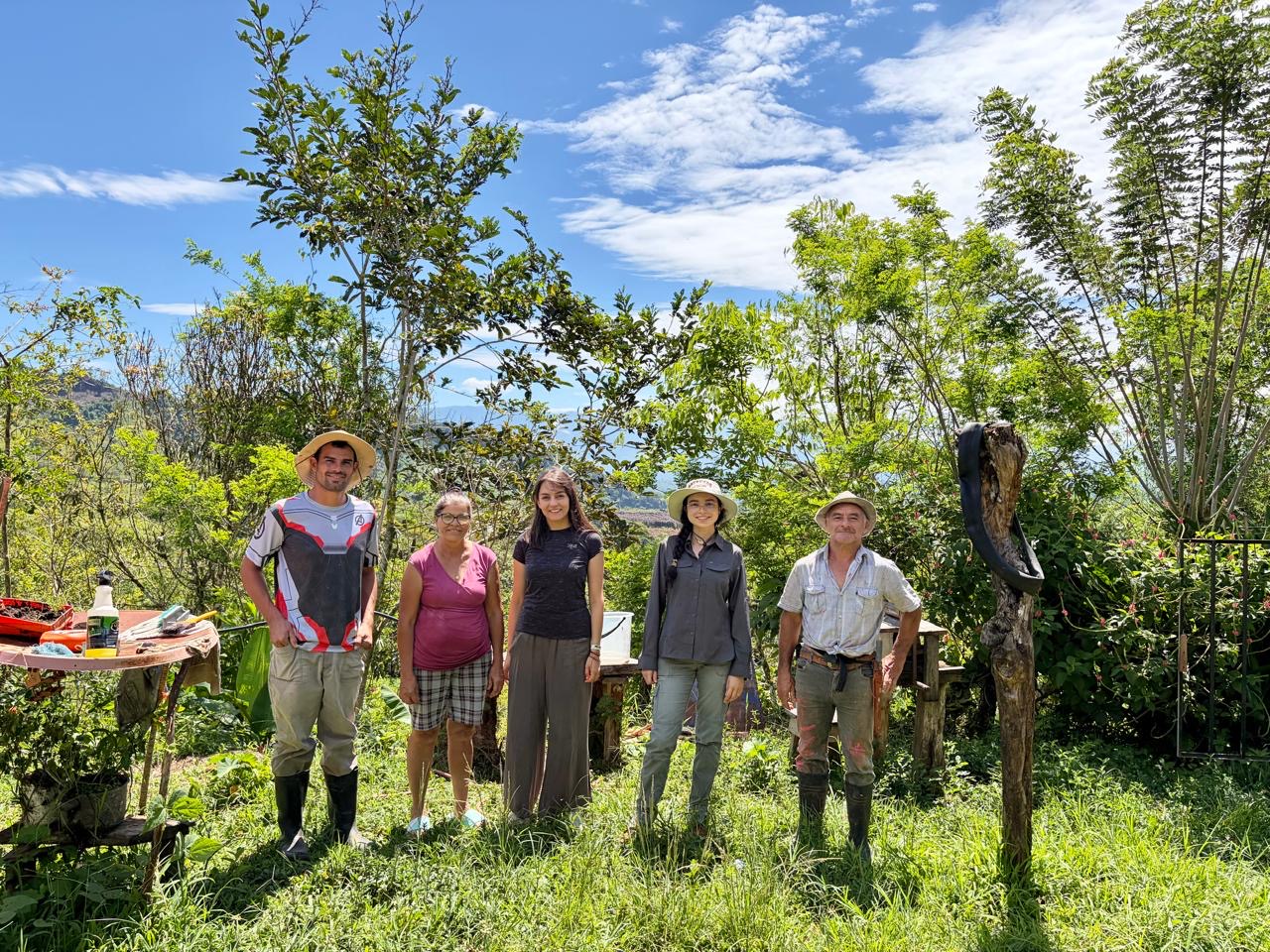
For Uriel, a young rancher from Paraíso Changüina in the Puntarenas province, restoration is a way to better protect his farm and his community. “Restoration and environmental protection are very important because the community is currently facing a high risk of landslides,” he said. “I have seen that the risk is lower in reforested zones.”
Other farmers approach restoration through a different lens. Many worried that setting aside productive land could reduce their family’s income or create new financial risks, while some pointed to past experiences with failed seedlings or inconsistent technical support.
Despite differences, nearly everyone emphasized the importance of trust. Farmers repeatedly described wanting long-term partners who provide reliable technical support and follow through on their commitments.
Building a connected future
Gathering community insights is a critical first step in designing solutions around farmers’ needs, knowledge, and aspirations. Rather than asking farmers to choose between conservation and their livelihoods, the project will explore approaches that integrate the two, like silvopastoral systems that combine trees, forage crops, and livestock within a single managed landscape.
“No two farms are exactly alike. By understanding farmers’ motivations, barriers, and values, Rare is helping Osa Conservation design restoration strategies that fit local livelihoods and support the collective action needed to connect wildlife corridors,” said Ana Barajas, Rare’s applied social scientist managing the partnership. “Our goal is to work alongside farmers to build landscapes where cattle ranching, agriculture, and biodiversity can coexist, strengthen one another, and remain viable for the long term.”
Together, Rare’s expertise in community-led behavior change and Osa Conservation’s deep local relationships will help ensure that Costa Rica’s wildlife corridors are built not outside communities, but through and with them, demonstrating that thriving farms and forests can be part of the same landscape and future.